

ScanCAD PCB Reverse Engineering and Inspection for Medical Equipment
Keep Critical Equipment Running—And Critical Components Verified
The Million-Dollar Obsolescence Problem
Modern hospitals depend on imaging systems, patient monitors, and laboratory instruments that represent millions of dollars in capital investment. A single CT scanner costs between $150,000 and $3 million. MRI systems range from $1.2 million to $3 million. Ultrasound platforms, X-ray systems, and specialized diagnostic instruments each represent six- and seven-figure investments designed for 10 to 20 years of continuous clinical use.
But the electronics inside these systems weren’t designed for the same lifespan. Control boards, image processors, power supplies, and interface modules rely on semiconductors and passive components with commercial lifecycles of five to ten years. When a critical board fails and the original components are no longer manufactured, hospitals face a devastating choice: spend hundreds of thousands of dollars replacing an otherwise functional system, or find a way to keep it running.
The answer is increasingly clear. The global refurbished medical equipment market exceeds $16 billion and is growing at over 10 percent annually. Hospitals, imaging centers, and health systems are choosing to extend the life of proven capital equipment rather than absorb the cost and disruption of wholesale replacement.
The Regulatory Wall
Medical devices operate under strict FDA oversight. Under the 510(k) framework, any modification that could significantly affect a device’s safety or effectiveness may require a new regulatory submission. That includes changes to electronic components on control boards and processing modules.
This creates a practical barrier to redesign. Even when a more modern replacement component exists, integrating it may trigger the need for new FDA review—a process that can take months and cost hundreds of thousands of dollars in testing, documentation, and regulatory fees. For a hospital that simply needs a failed board replaced, this path is neither practical nor proportional.
Form-fit-function replacement changes the equation. By producing an exact-match reproduction of the original board—same layout, same components, same electrical behavior—the replacement maintains the original device design. No functional change means no regulatory trigger.
Reverse Engineering for Medical Capital Equipment
ScanCAD’s high-resolution scanning technology captures every detail of an existing circuit board and produces a complete Technical Data Package: Gerber files, bill of materials, netlist, and schematic. This TDP provides everything needed to manufacture an exact-match replacement board—one that preserves the original form, fit, and function of the device.
For hospitals and third-party service organizations, this means the ability to source replacement electronics for legacy medical equipment without depending on original equipment manufacturers who may have discontinued support years ago.
Diagnostic Imaging Systems
CT scanners, MRI systems, ultrasound platforms, digital X-ray, and fluoroscopy equipment all depend on complex multi-board electronic assemblies. Image acquisition boards, reconstruction processors, gantry controllers, and power management modules are all candidates for reverse engineering when original replacements are no longer available. ScanCAD produces the technical data packages needed to manufacture exact-match replacements that keep these high-value systems in clinical service.
Patient Monitoring and Life Support
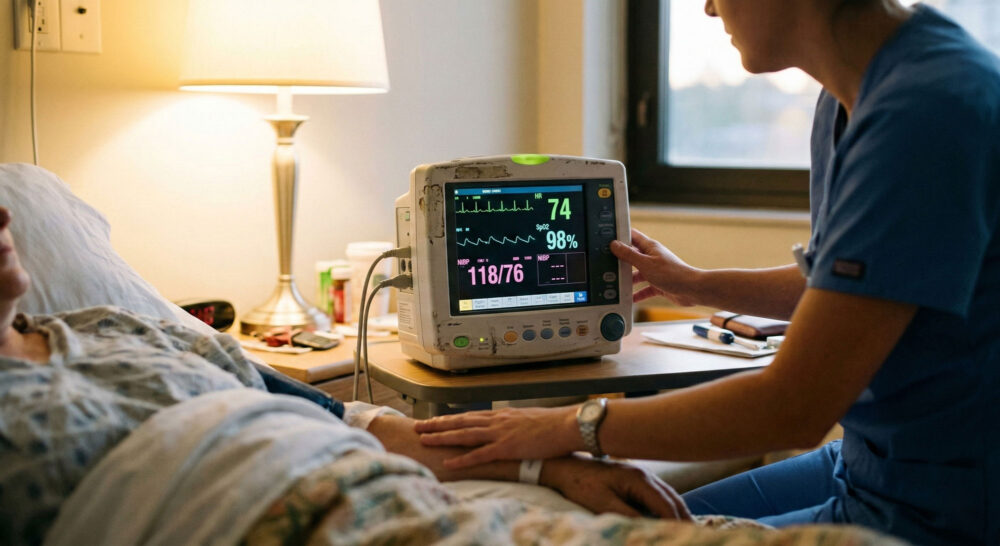
Vital signs monitors, ventilators, infusion pumps, and anesthesia delivery systems are foundational to patient care. Many of these systems have been in continuous hospital use for a decade or more, with electronics that long predate current component availability. When critical boards fail, ScanCAD enables replacement manufacturing that maintains device integrity without modification.
Laboratory and Diagnostic Instruments
Clinical analyzers, automated laboratory systems, centrifuges, and point-of-care diagnostic instruments represent another category of long-lifespan medical capital equipment. These systems often rely on specialized control electronics that were designed for a specific instrument platform and are not interchangeable. Reverse engineering ensures that replacement boards match the original design exactly, preserving instrument calibration and validated performance.
Precision 2D Inspection for Medical Components
Beyond reverse engineering, ScanCAD’s precision scanning platform serves a second critical function in medical applications: high-accuracy 2D inspection of small, complex components where dimensional verification is essential.
Medical device manufacturing demands extraordinary quality control. Components used in implantable devices, endovascular systems, fine-wire assemblies, and micro-fabricated therapeutic products must meet exacting dimensional specifications. Traditional measurement methods can struggle with parts this small and geometrically complex.
ScanCAD’s 2D scanning captures detailed dimensional data with exceptional accuracy, enabling manufacturers and quality teams to verify that critical features, geometries, and tolerances conform to specification. For medical components where even small deviations can affect clinical performance, this level of inspection precision is not optional—it is essential.
Where Precision Meets Patient Safety
In medical device manufacturing, inspection is not just a quality checkbox—it is a patient safety imperative. ScanCAD’s 2D inspection capabilities give medical device manufacturers and contract manufacturers a powerful tool for verifying the dimensional integrity of small, high-precision components before they ever reach a patient. From implantable devices to micro-scale therapeutic components, ScanCAD provides the accuracy these applications demand.
From Artifact to Replacement-Ready
ScanCAD’s reverse engineering workflow transforms a physical board artifact into a complete, manufacture-ready Technical Data Package:
Step 1—High-Resolution Scanning. The original board is scanned at high resolution, capturing pad geometry, trace routing, via placement, and layer structure with exceptional accuracy.
Step 2—Intelligent Data Extraction. ScanCAD’s software extracts Gerber data, component footprints, and connectivity information directly from the scanned image data.
Step 3—Complete Technical Data Package. The output includes production-ready Gerber files, a verified bill of materials, a complete netlist, and a reconstructed schematic—everything a manufacturer needs.
Step 4—Manufacturing-Ready Output. The TDP is delivered in industry-standard formats, ready for board fabrication and component assembly with any qualified manufacturer.
Step 5—Validation and Verification. The reproduced board is verified against the original artifact to confirm form, fit, and function compliance.
Two Capabilities, One Platform
What makes ScanCAD uniquely valuable in the medical space is the convergence of two capabilities on a single precision platform. Reverse engineering keeps high-value capital equipment operational when original electronics are no longer available. Precision 2D inspection verifies the dimensional accuracy of critical medical components during manufacturing. Both capabilities draw on the same core technology: high-accuracy scanning that captures fine detail with the precision medical applications demand.
Why Medical Organizations Choose ScanCAD
A fraction of the cost of equipment replacement. When a CT scanner or MRI system can be kept in service for the cost of a single replacement board, the return on investment is immediate and dramatic.
Regulatory-aware documentation. Complete Technical Data Packages that support form-fit-function replacement, helping avoid unnecessary regulatory triggers.
Inspection precision for critical components. High-accuracy 2D scanning for dimensional verification of small, complex medical parts where precision is non-negotiable.
OEM independence. Hospitals and service organizations are no longer held captive by discontinued product lines or sole-source pricing.
33+ years of precision scanning expertise. ScanCAD has the engineering depth to handle the most demanding medical applications.
Keep Patients First
Every piece of medical equipment that stays in service is equipment that continues serving patients. Every critical component that passes dimensional inspection is a component that can be trusted in clinical use. ScanCAD’s precision scanning technology supports both missions—keeping capital equipment operational and keeping manufactured components verified. When lives depend on the equipment working and the parts being right, ScanCAD delivers the accuracy and documentation the medical industry demands.
Contact ScanCAD to discuss how precision scanning can support your medical equipment sustainment and component inspection requirements.